
Originally published by Fruchthandel on 29 September 2026. Tanslated from the original German article.
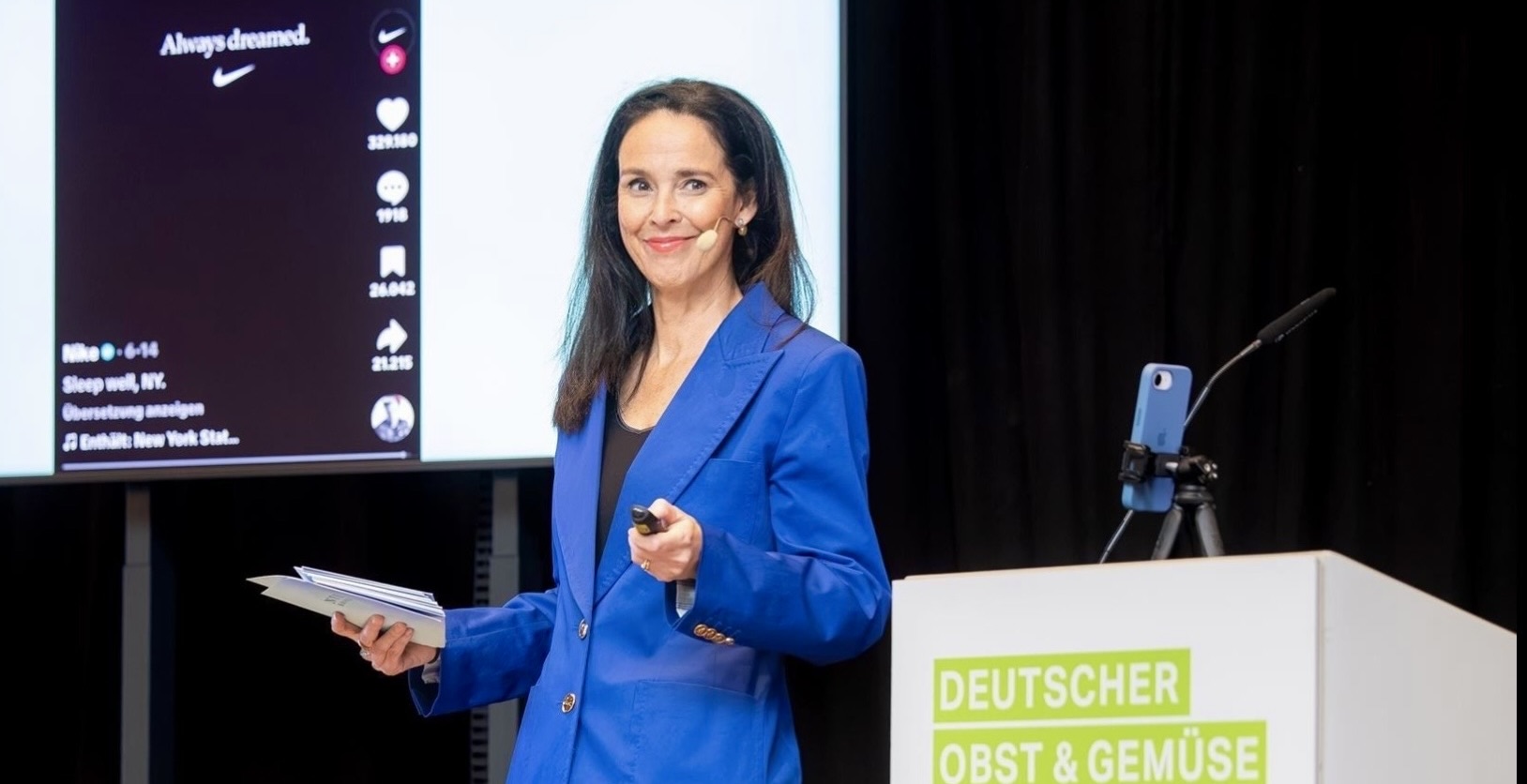
Who still remembers PE lessons at school? Whenever long-distance running was on the timetable, most students probably made a very quick escape. But when Nike launched its running shoe on the market, the masses could hardly be stopped. Jogging was the new thing, and it was absolutely en vogue.
Changing the meaning through marketing Fresh Produce Branding Needs to Reinvent Itself.
“From this example, we can see that it was not running itself that changed, but its meaning through the right marketing,” explained Nuria Pizan, Brand Builder & Fruit Brand Expert, NUR Brands, during her presentation “ATTENTION, TikTok Generation! How Fruit and Vegetable Branding Needs to Reinvent Itself.”
For fruit and vegetables, this means that the TikTok generation does not buy fruit, but meaning. Taste remains central, but it is only through story, design and POS that fruit becomes desirable brands. Those who create relevance do not win through price, but through emotion and experience.
“Nike managed to sell self-confidence and a sense of belonging. This message always works – with Gen Z as well as with the over-50s.”
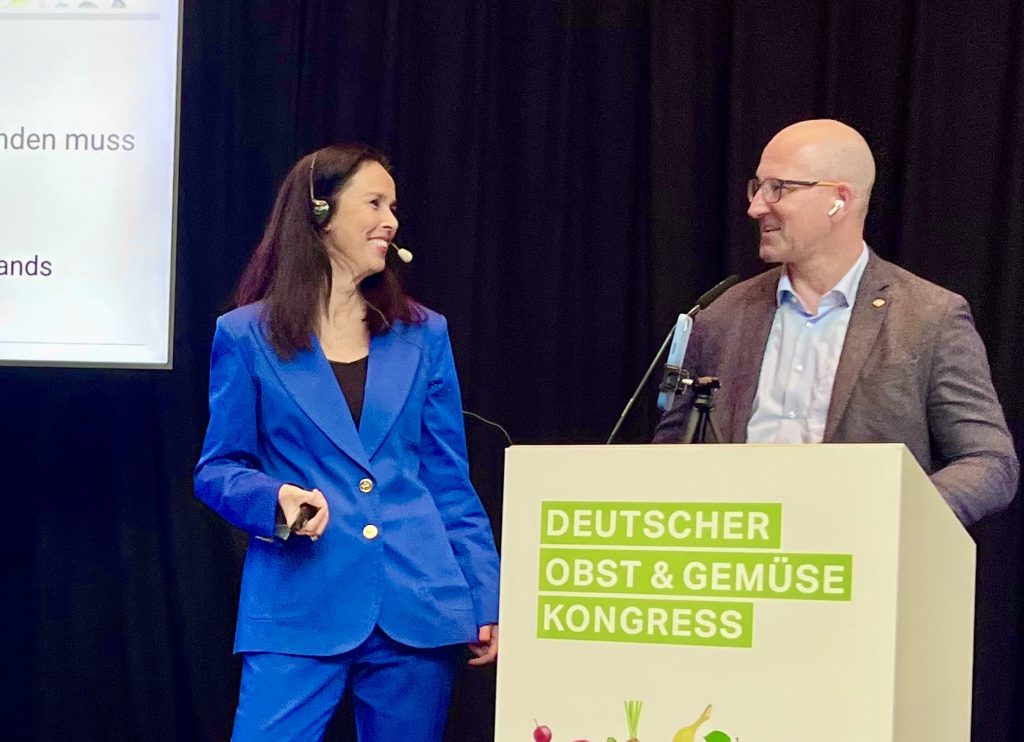
Creating emotional added value
Compared with other industries, however, the fruit and vegetable sector invests less than one percent of its turnover in marketing. Yet brands attract more attention, create emotional added value and make lifestyle tangible, said Pizan, who described how she had wanted to buy blueberries online before the DOGK.
The four pack sizes on offer were all promoted with the same photograph. “So how is the consumer supposed to recognise which product is more valuable?”
In principle, the industry has a very easy task when it comes to getting its products into the hands of consumers, Pizan argued. “Let’s just look at packaging across different industries. Many products feature images of fruit and vegetables, for example yoghurt. We know that there is hardly any fruit in it at all, and yet it is still bought. If that works, there must be enormous potential for real fruit and vegetables. Because: You are not selling illusions, you are selling the original,” Pizan appealed to the audience.
It doesn’t have to be beautiful
Consumers on TikTok and social media are reached through videos. The “Cucumber Guy”, who prepared a cucumber salad in a video and ultimately caused a cucumber shortage in Scandinavia, is just one prominent example. However, it is difficult to predict in advance which video will be successful.
“Videos are definitely better than photos. And there need to be people in them, because we like seeing people.”
Working with influencers therefore plays an important role. It is often cheaper to involve an influencer in the company than to pay for individual posts. Caro Daur, for example, is a partner in Hamburg-based drinks start-up Joony’s. According to Pizan, one post by her costs €20,000.
In Hong Kong, physical retail also plays a major role. The food retail environment is changing, becoming colourful, bright and inspired by the gaming world.
“It doesn’t have to be beautiful. It has to emotionally reach the TikTok generation. Then even melons can be sold for €22 apiece. Putting a price on a good feeling, however, is not easy,” Pizan knows.
The industry must not be let off the hook when it comes to building a community digitally. But once the brand has been created, the product has to deliver.
Read the original article here:
https://www.fruchthandel.de/news/dogk-keine-illusionen-verkaufen-sondern-das-original
Listen to the accompanying podcast here:
https://www.fruchthandel.de/mediathek